
Petrol Lawnmower
Petrol Lawnmower
Challenge Petrol Lawnmower Products

My Petrol Chainsaw will not tension the chain correctly
If the chain on your Challenge PCS38Z petrol chainsaw will not tension correctly, the most common causes are an engaged chain brake, an incorrectly positioned tensioner pin or an incorrectly adjusted guide bar.
Correct chain tension is essential for safe operation, efficient cutting and reducing wear on the chain and guide bar.
Quick Answer
If your chainsaw chain will not tension correctly:
- Disengage the chain brake.
- Loosen the two guide bar nuts.
- Check the tensioner pin is correctly located in the guide bar.
- Adjust the chain using the internal tensioning screw.
- Hold the tip of the guide bar upwards while setting the tension.
- Tighten the guide bar nuts securely.
- Check that the chain moves freely and can be lifted slightly from the guide bar.
If the chain still cannot be tensioned, inspect the guide bar, chain and tensioning mechanism for wear or damage.
Before You Begin
Before adjusting the chain:
- Switch off the engine and allow it to cool completely.
- Remove the spark plug cap to prevent accidental starting.
- Place the chainsaw on a stable, level surface.
- Wear suitable personal protective equipment (PPE), including cut-resistant gloves.
This guide applies to Challenge petrol chainsaws.
Steps
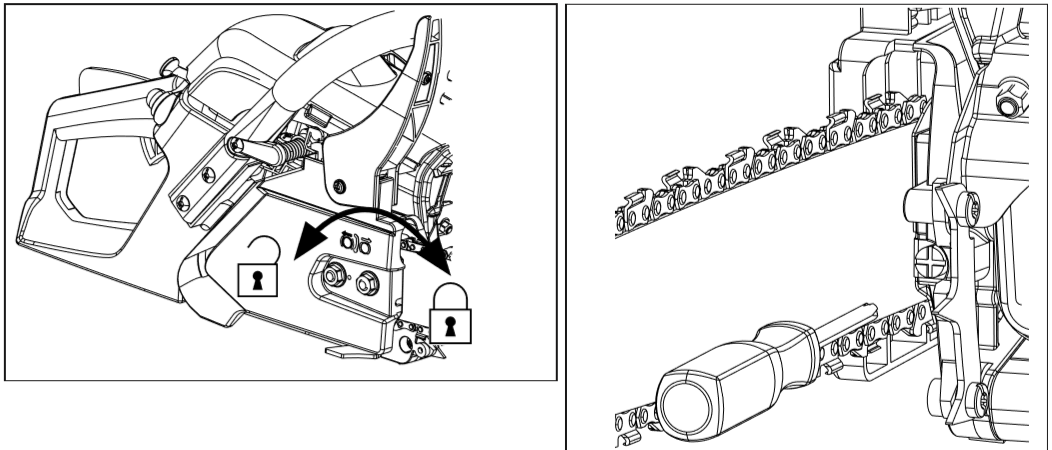
Step 1 – Disengage the Chain Brake
Ensure the chain brake is fully released.
The chain must be free to move around the guide bar before it can be adjusted correctly.
Step 2 – Loosen the Guide Bar Nuts
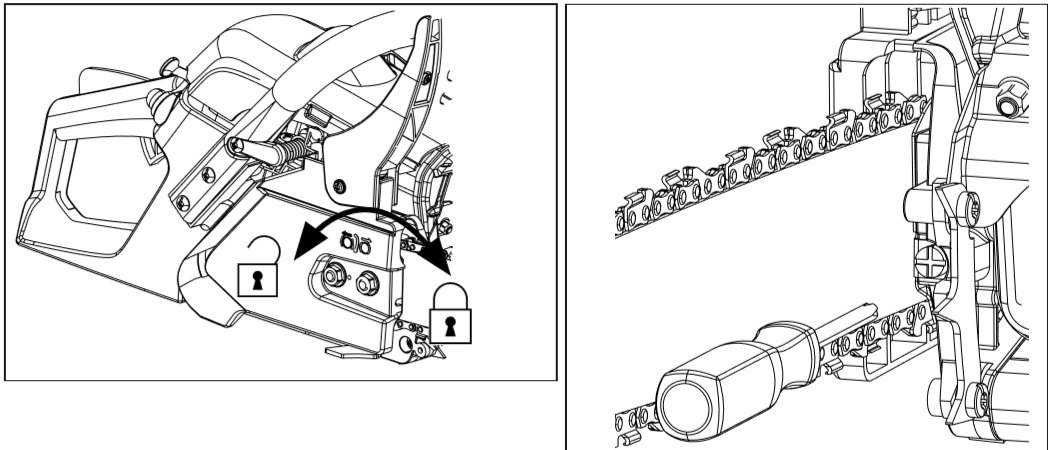
Using a suitable spanner:
- Loosen the two guide bar retaining nuts.
- Do not remove the nuts completely.
This allows the guide bar to move during adjustment.
Step 3 – Check the Tensioner Pin
Inspect the chain tensioner pin.
Ensure it is correctly located in the guide hole on the guide bar.
If the tensioner pin is not engaged, the guide bar will not move when the tensioning screw is turned.
Step 4 – Adjust the Chain Tension
Using the internal tensioning screw:
- Turn the screw gradually to adjust the chain tension.
- Hold the tip of the guide bar upwards while making the adjustment.
Continue until:
- The chain sits correctly in the guide bar groove.
- The chain can be lifted slightly from the guide bar.
- One drive link can be pulled clear before the chain returns into position.
Do not overtighten the chain, as this can increase wear on the chain, guide bar and engine.
Step 5 – Tighten the Guide Bar Nuts
While continuing to support the guide bar:
- Tighten both guide bar nuts securely.
- Ensure the guide bar remains in position while tightening.
Step 6 – Check the Chain
Rotate the chain by hand while wearing protective gloves.
Confirm that:
- The chain moves smoothly around the guide bar.
- The chain remains correctly tensioned.
- The guide bar is securely fitted.
Re-adjust the chain if necessary before using the chainsaw.
Frequently Asked Questions
Why won't my chainsaw chain tighten?
The most common causes are an engaged chain brake, an incorrectly positioned tensioner pin, loose guide bar nuts or a worn chain tensioning mechanism.
How tight should the chainsaw chain be?
The chain should sit firmly in the guide bar groove while still being able to lift slightly from the bar, exposing one drive link before returning into position.
Why do I need to lift the guide bar while adjusting the chain?
Supporting the guide bar removes movement from the mounting points and helps ensure the chain remains correctly tensioned after the guide bar nuts are tightened.
Why does the chain become loose again after tightening?
This can happen if the guide bar nuts are not fully tightened, the guide bar moves during adjustment or the chain has stretched through normal use.
Can I use the chainsaw if the chain won't tension correctly?
No. Operating a chainsaw with an incorrectly tensioned chain increases the risk of chain derailment, poor cutting performance and damage to the guide bar or sprocket.
What should I do if I still can't tension the chain?
Inspect the chain, guide bar and tensioning mechanism for wear or damage. If all components appear to be fitted correctly and the problem persists, contact technical support for further assistance.
View ArticleMy Petrol Lawnmower Is Leaking Fuel from the Primer Bulb
If fuel is leaking from the primer bulb on your petrol lawnmower, the most common cause is a stuck carburettor float valve. When the float valve sticks open, fuel can overfill the carburettor and flow back through the primer system, causing fuel to leak from the primer bulb.
In many cases, this can be resolved without replacing any parts by carrying out a simple bleed and tap procedure.
Quick Answer
If your petrol lawnmower is leaking fuel from the primer bulb:
- Locate the carburettor.
- Loosen the angled float chamber nut.
- Allow fuel to drain for 20–30 seconds.
- Tighten the nut securely.
- Gently tap the carburettor float chamber.
- Restart the engine and check if the leak has stopped.
If the primer bulb continues to leak after completing these steps, the carburettor may require cleaning, servicing or replacement.
Before You Begin
Before carrying out this procedure:
- Switch off the engine and allow it to cool completely.
- Remove the spark plug cap to prevent accidental starting.
- Work in a well-ventilated area away from naked flames, sparks and other ignition sources.
- Wear suitable personal protective equipment (PPE), including protective gloves and eye protection.
- Place a suitable container beneath the carburettor to collect any fuel that drains during the procedure.
Petrol is highly flammable. Wipe up any spilled fuel before attempting to restart the engine.
Steps
Step 1 – Locate the Carburettor
Locate the carburettor on the side of the engine.
It is positioned between the air filter housing and the engine block and is approximately the size of a fist.
Step 2 – Loosen the Float Chamber Nut
Locate the two nuts on the carburettor float chamber:
- One on the bottom of the float chamber.
- One positioned at approximately a 45° angle.
Using a suitable spanner, carefully loosen the angled nut.
Do not remove the nut completely.
Step 3 – Bleed the Carburettor
Allow fuel to drain from the loosened nut for approximately 20–30 seconds.
This relieves pressure inside the carburettor and helps remove excess fuel from the float chamber.
Step 4 – Tighten the Float Chamber Nut
Once the fuel has drained:
- Tighten the angled nut securely.
- Ensure it is fully sealed.
- Do not overtighten.
Step 5 – Tap the Float Chamber
Using the handle of a screwdriver, a spanner or a similar tool:
- Gently tap the float chamber several times.
This can help free a float valve that has become stuck in the open position.
Avoid striking the carburettor with excessive force.
Step 6 – Restart the Lawnmower
Reconnect the spark plug cap if it was removed.
Prime the engine if required and start the lawnmower using the normal starting procedure.
Inspect the primer bulb and carburettor to confirm that the fuel leak has stopped.
Frequently Asked Questions
Why is fuel leaking from my primer bulb?
Fuel usually leaks from the primer bulb because the carburettor float valve has become stuck, allowing the float chamber to overfill and forcing fuel back through the primer line.
What does the bleed and tap procedure do?
Draining a small amount of fuel reduces pressure inside the carburettor, while gently tapping the float chamber can help free a sticking float valve.
Will this fix every primer bulb fuel leak?
No. If the float valve, seals or carburettor are worn or damaged, the carburettor may need to be cleaned, repaired or replaced.
Is it safe to use the lawnmower if fuel is leaking?
No. Fuel leaks present a fire hazard and the lawnmower should not be operated until the leak has been repaired.
Why has the float valve become stuck?
A float valve can stick due to stale fuel, dirt or debris inside the carburettor, or after the lawnmower has been stored for an extended period without use.
What should I do if the leak continues?
If fuel continues to leak after completing the bleed and tap procedure, inspect the carburettor for contamination or damage. The float valve or carburettor assembly may require servicing or replacement.
View ArticleHow do I replace the blade adapter on my Challenge XSZ40E Petrol Lawnmower
The blade adapter (also known as the blade carrier or blade boss) connects the cutting blade to the engine crankshaft. If it becomes damaged after striking a hard object, it should be replaced before the lawnmower is used again to prevent excessive vibration and further damage.
This guide explains how to replace the blade adapter on the Challenge XSZ40E petrol lawnmower.
Quick Answer
To replace the blade adapter on a Challenge XSZ40E petrol lawnmower:
- Remove the blade.
- Lift the belt pulley to the top of the crankshaft.
- Align the blade adapter with the pulley.
- Rotate the adapter anti-clockwise to lock it into position.
- Push the pulley and adapter fully onto the crankshaft.
- Refit the blade and tighten the blade bolt securely.
Always check that the blade adapter is fully engaged before operating the lawnmower.
Before You Begin
Before carrying out this repair:
- Switch off the engine and allow it to cool completely.
- Remove the spark plug cap to prevent accidental starting.
- Wear suitable personal protective equipment (PPE), including protective gloves.
- Place the lawnmower on a stable, level surface.
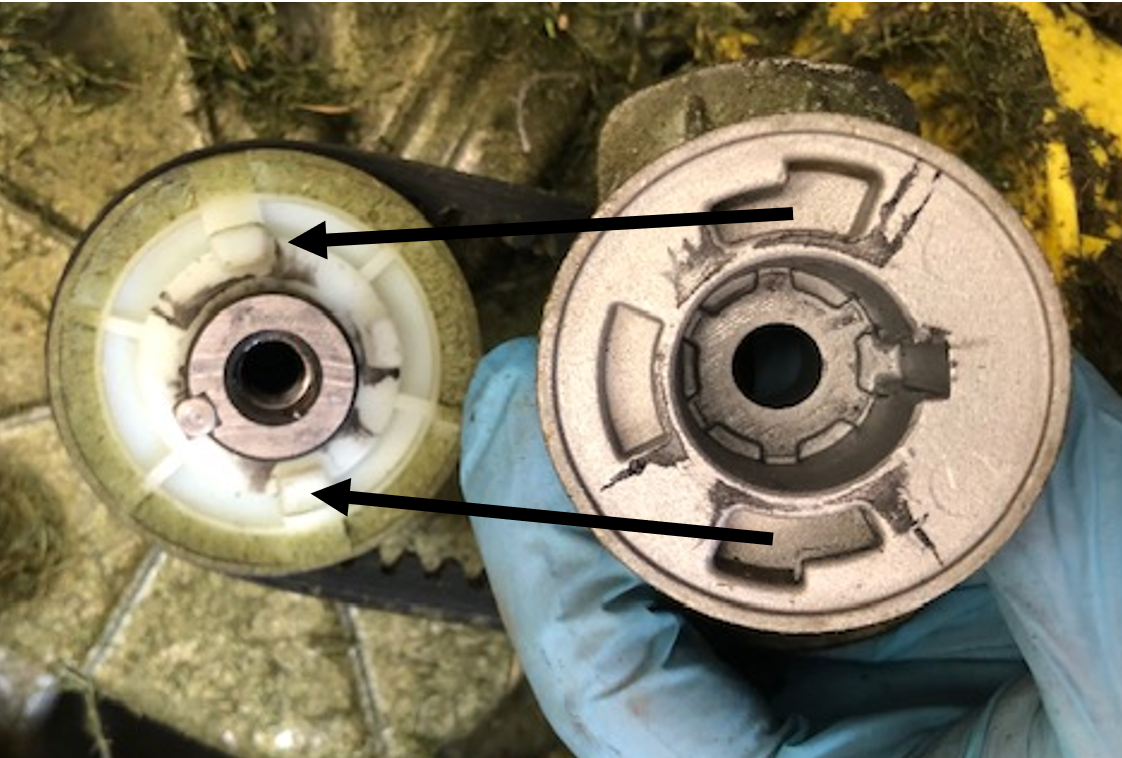
The Challenge XSZ40E uses a two-piece blade adapter system consisting of a disc pulley and a T-shaped blade adapter. These components must be correctly aligned during installation.
Steps
Step 1 – Remove the Blade
Remove the blade retaining bolt using a suitable socket or spanner.
Carefully remove:
- The blade.
- The retaining washer, if fitted.
Place all components somewhere safe for reassembly.
Step 2 – Position the Belt Pulley
Lift the belt pulley upwards until it reaches the top of the crankshaft.
This provides enough clearance to install the blade adapter correctly.
Step 3 – Align the Blade Adapter
Position the T-shaped blade adapter beneath the pulley.
Ensure the two engagement clips align correctly with the corresponding slots in the disc pulley.
Rotate the blade adapter anti-clockwise until it locks into the pulley.
Step 4 – Seat the Assembly
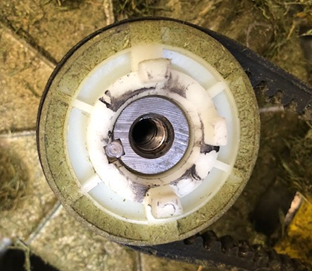
Push the blade adapter and pulley assembly downward together until they are fully engaged on the crankshaft.
Check that:
- The adapter sits flush.
- The pulley is correctly positioned.
- There is no excessive movement.
Step 5 – Refit the Blade
Position the blade onto the blade adapter.
Install the blade retaining bolt and tighten it securely.
Ensure the blade is fitted in the correct orientation and is firmly secured.
Frequently Asked Questions
What is the blade adapter?
The blade adapter connects the cutting blade to the engine crankshaft and transfers engine power to the blade. It is also designed to absorb impact if the blade strikes a solid object.
How do I know if the blade adapter is damaged?
Common signs include excessive vibration, a loose blade, visible cracks or distortion, and uneven cutting performance.
Why does the XSZ40E blade adapter look different?
The Challenge XSZ40E uses a two-piece system consisting of a disc pulley and a T-shaped blade adapter, which must be interlocked before being fitted onto the crankshaft.
Can I continue using the lawnmower with a damaged blade adapter?
No. A damaged blade adapter can allow the blade to become loose, increase vibration and potentially cause further damage to the engine.
Should I inspect anything else while replacing the blade adapter?
Yes. Check the blade for damage, ensure the drive belt is correctly seated, and inspect the crankshaft for signs of bending or wear.
What should I check before using the lawnmower?
Before starting the engine, ensure the blade is securely fitted, the blade adapter is fully engaged, the drive belt is correctly positioned and the blade rotates smoothly by hand with the spark plug disconnected.
Removing and Replacing the Exhaust on an SE475 Engine
If the exhaust on your SE475 engine is damaged, loose or excessively corroded, it should be replaced to ensure the engine operates safely and efficiently. This guide explains how to remove the old exhaust assembly and fit a replacement.
Quick Answer
To replace the exhaust on an SE475 engine:
- Remove the two 10mm exhaust retaining nuts.
- Remove the exhaust cover.
- Lift off the exhaust assembly.
- Check the exhaust heat gasket is correctly positioned.
- Fit the new exhaust assembly.
- Refit the exhaust cover and tighten the retaining nuts securely.
- Check the exhaust is firmly fitted before starting the engine.
Before You Begin
Before carrying out this repair:
- Switch off the engine and allow it to cool completely.
- Remove the spark plug cap to prevent accidental starting.
- Wear suitable personal protective equipment (PPE), including protective gloves.
- Place the machine on a stable, level surface.
Tools required:
- 10mm spanner or socket wrench
Do not work on the exhaust while it is hot, as it can cause serious burns.
Steps
Step 1 – Remove the Exhaust Retaining Nuts
Locate the two 10mm nuts securing the exhaust assembly to the engine.
Using a 10mm spanner or socket wrench:
- Remove both retaining nuts.
- Keep the nuts in a safe place for reassembly.
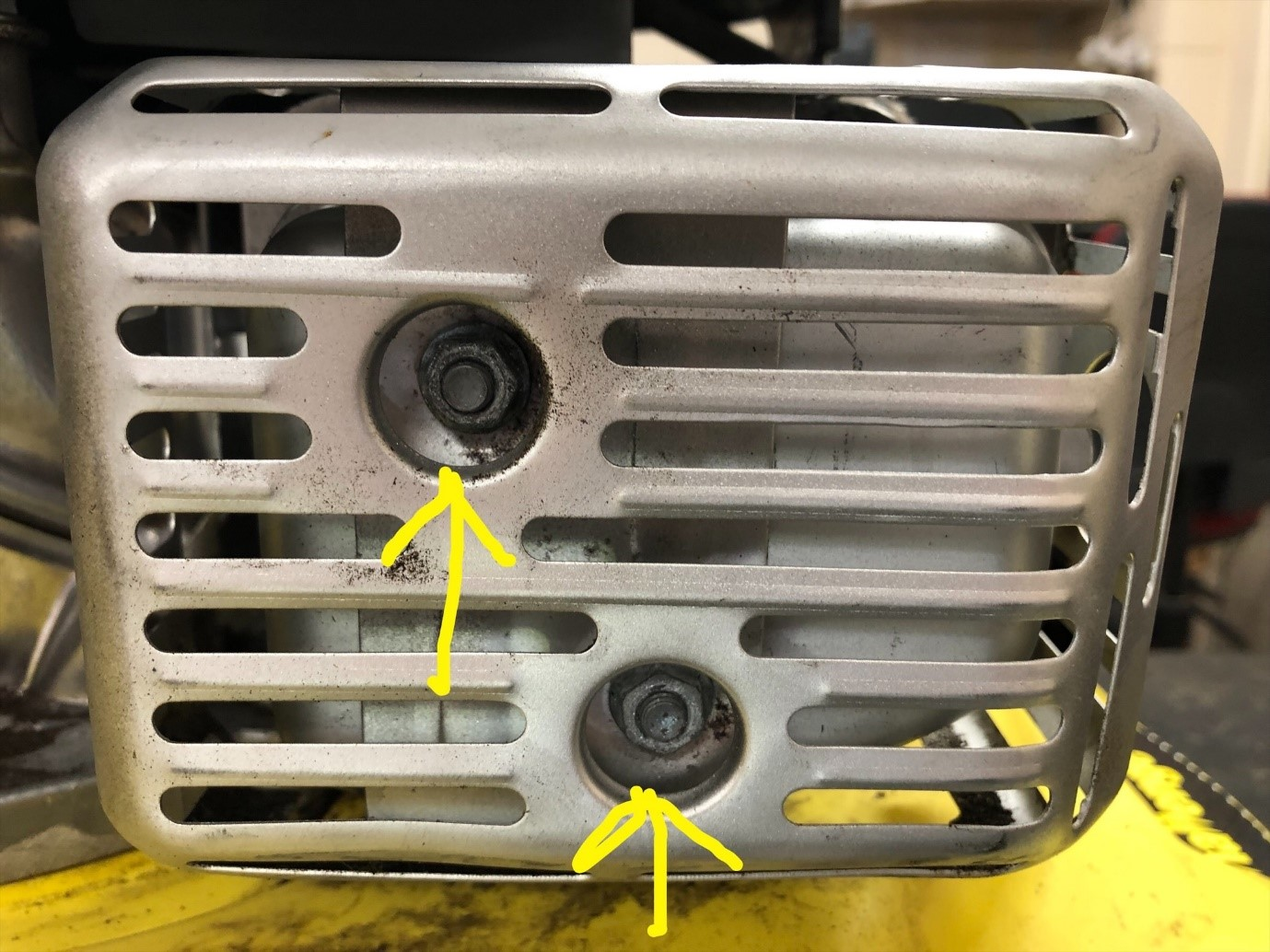
Step 2 – Remove the Exhaust Cover
Once the retaining nuts have been removed:
- Carefully lift off the exhaust cover.
- Place it safely to one side.
Take care not to damage the cover or lose any components during removal.
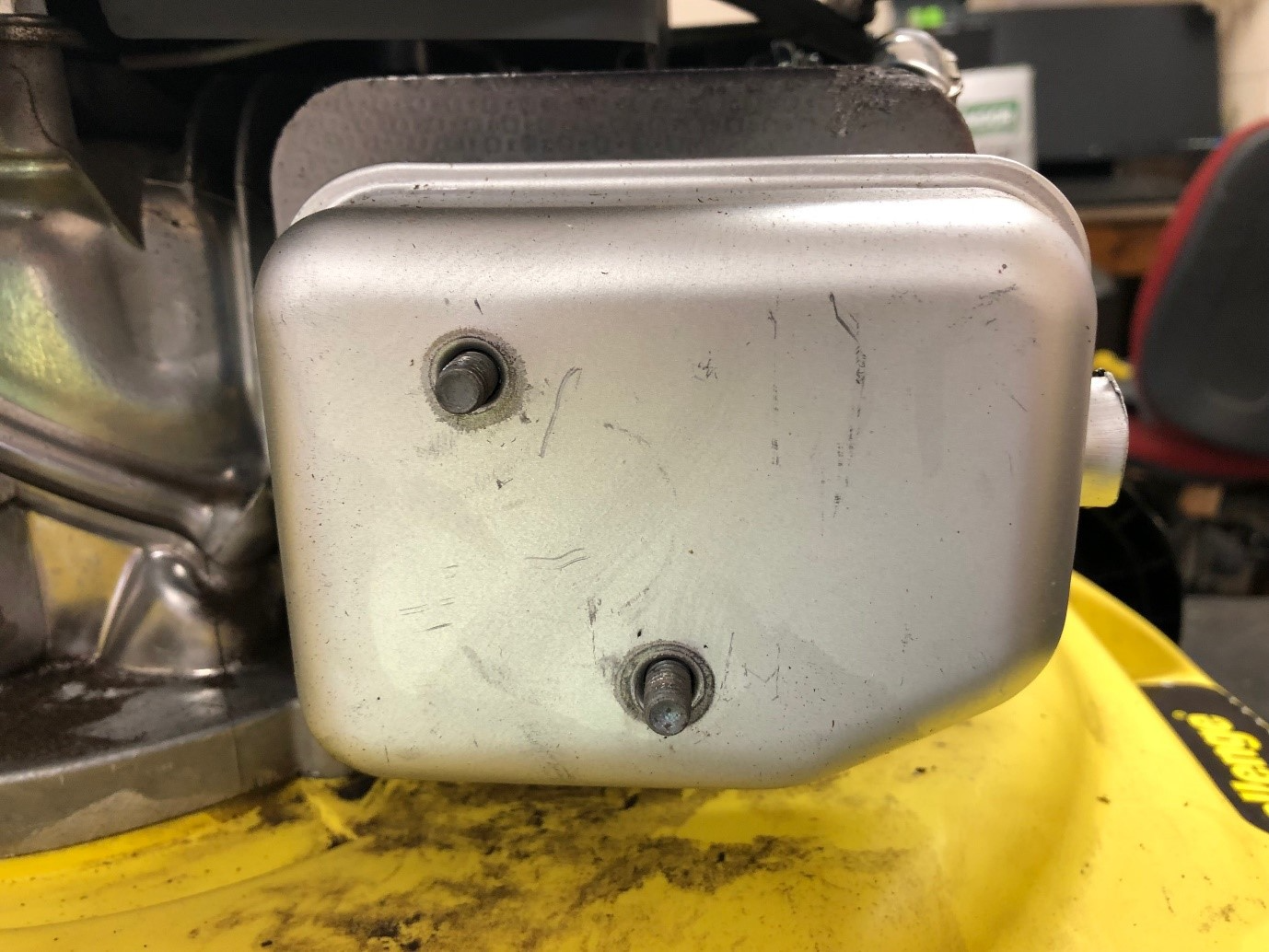
Step 3 – Remove the Exhaust Assembly
Carefully pull the exhaust assembly away from the engine.
Remove it completely and inspect the mounting area for dirt, damage or signs of gasket failure.
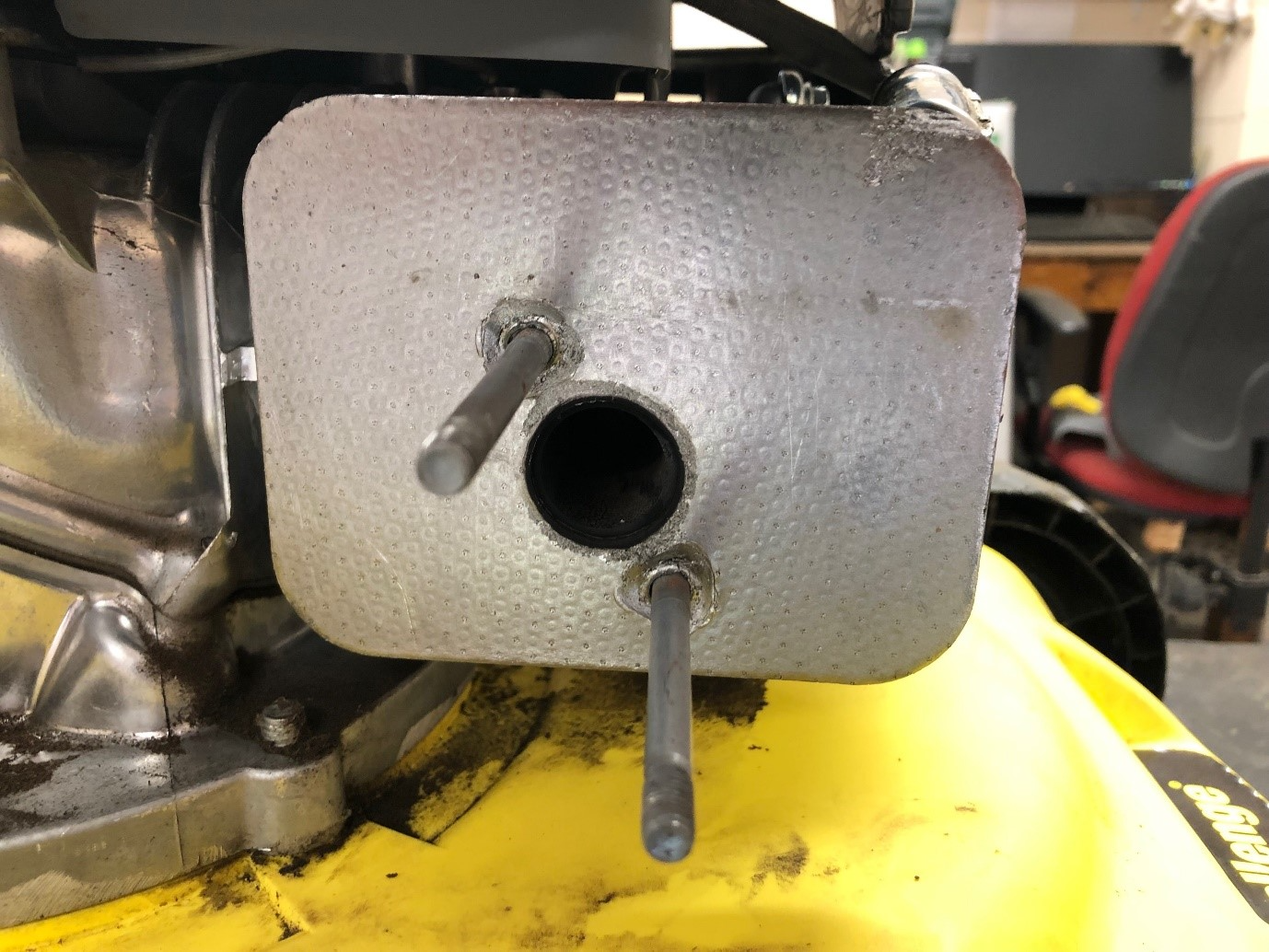
Step 4 – Fit the New Exhaust Assembly
Before installing the replacement exhaust:
- Check that the exhaust heat gasket is present.
- Ensure the gasket is correctly positioned and is not damaged.
Position the new exhaust assembly onto the engine, ensuring it aligns correctly with the mounting studs.
Step 5 – Refit the Exhaust Cover
Place the exhaust cover back into its original position.
Ensure the mounting holes align correctly with the exhaust studs.
Step 6 – Secure the Exhaust
Refit the two 10mm retaining nuts.
Tighten them evenly until the exhaust assembly is secure.
Do not overtighten the nuts, but ensure there is no movement in the exhaust assembly.
Frequently Asked Questions
Why would I need to replace the exhaust?
The exhaust may require replacement if it has become damaged, corroded, cracked or loose, or if excessive exhaust noise or leaks are present.
Can I reuse the exhaust heat gasket?
If the gasket is in good condition and undamaged, it may be reused. However, if it is worn, damaged or leaking, it should be replaced.
Why is the exhaust cover important?
The exhaust cover helps shield the hot exhaust components and should always be refitted before operating the engine.
Can I start the engine without the exhaust fitted?
No. The engine should never be operated without the exhaust assembly correctly installed.
View Article